By Gennaro Cuofano · The Business Engineer · 12 August 2026

The 1873 Delusion

History cannot tell us how the AI infrastructure cycle ends. It can show us which mechanisms to inspect.

Synopsis

The closest historical analogy for the AI infrastructure cycle becomes more useful when decomposed into seven mechanisms rather than treated as a prediction.

View this analysis as a KG entity

Article sections

The sixteen source sections preserved in document order.

Opening argument

For the last few years, I've been searching for useful historical analogies to make sense of what we're living through. I eventually brought them together into a thesis I call the AI Supercycle. History can help us understand the present, but only up to a point. Historical analysis is difficult precisely because the moment analysts begin converging around the same analogies and the same narrative

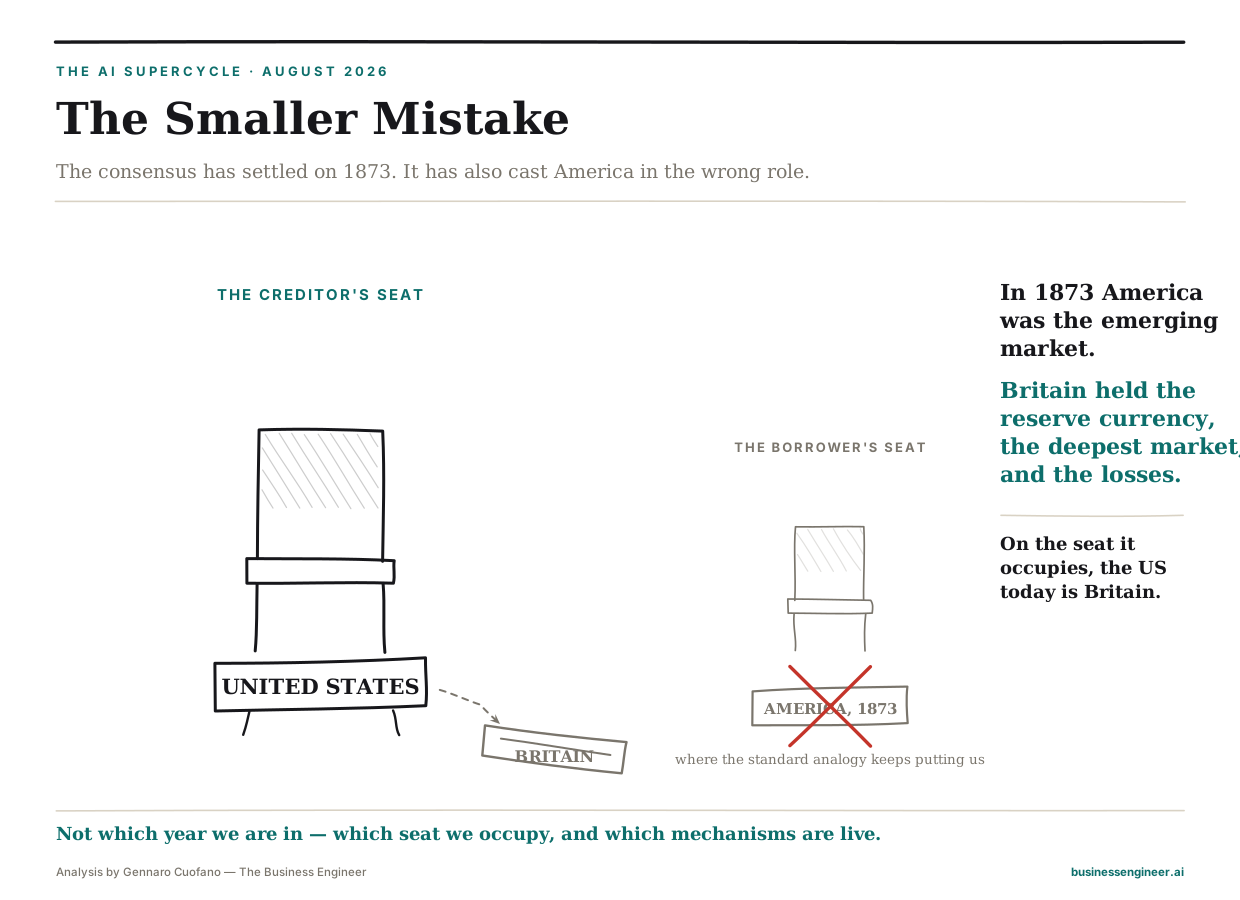
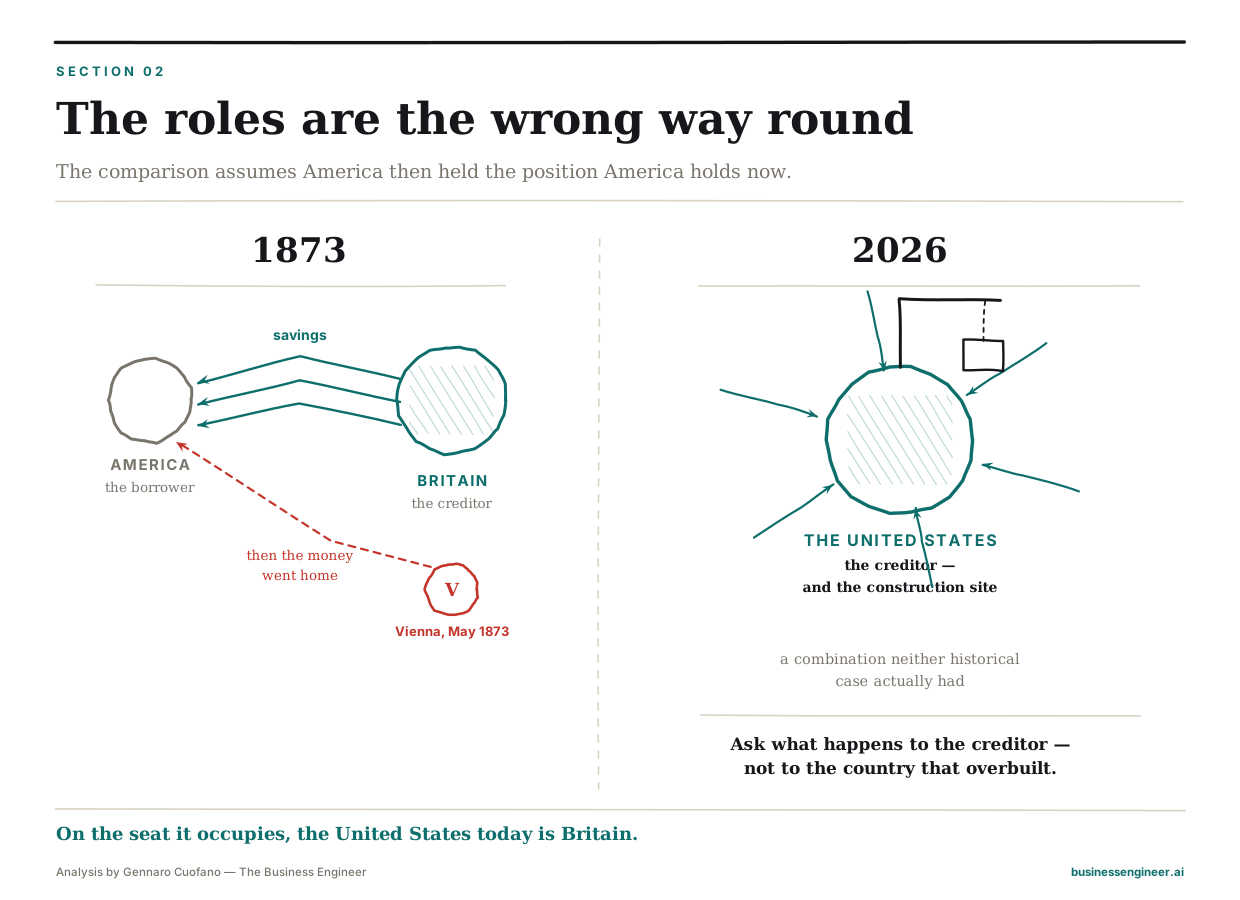
The roles are the wrong way round

The 1873 comparison quietly assumes that America then held the position America holds now. It did not. The gap is enormous. America in 1873 was the emerging market. It was a capital-importing industrialiser, building its infrastructure substantially with other people's savings. The Federal Reserve's own historical work on the period carries the title Foreign Portfolio Investment When the United St

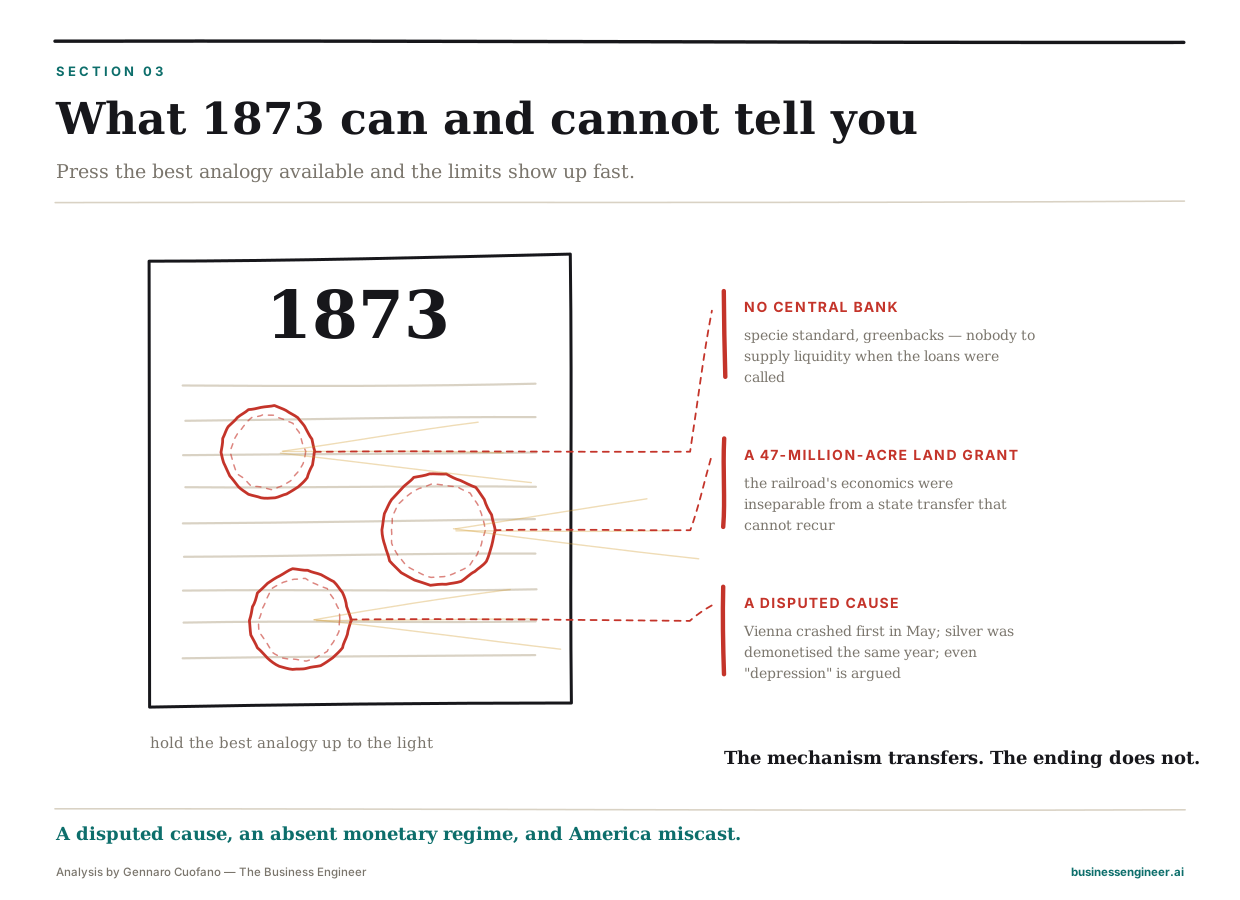
What 1873 can and cannot tell you

Press the best analogy available and the limits show up fast. The monetary regime has no counterpart, and it is not what people usually say. America in 1873 was not on a simple gold standard. Greenbacks had been inconvertible since 1862. The Specie Resumption Act only passed in 1875, and resumption came on 1 January 1879. So this was a contested, partly-paper regime moving toward gold — and there

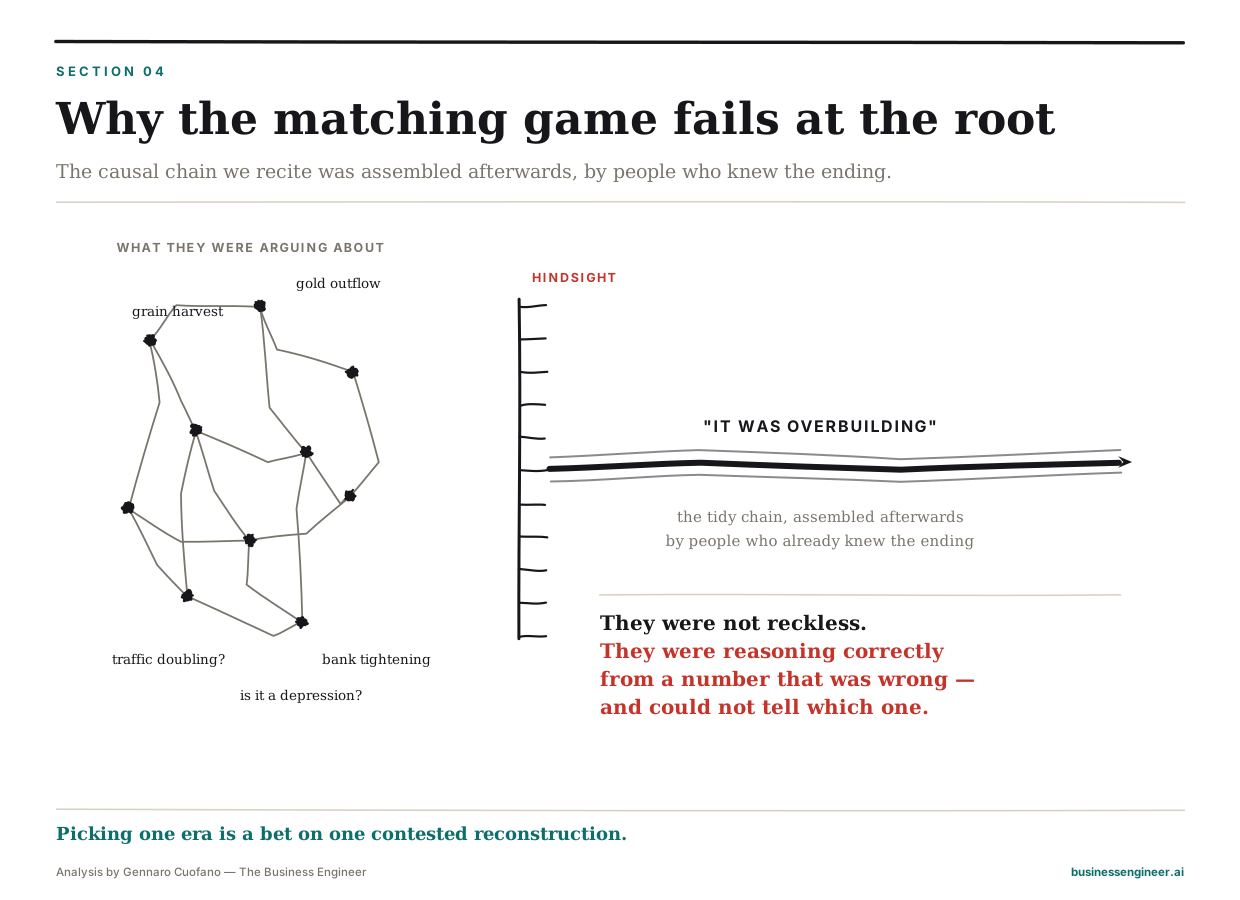
Why the matching game fails at the root

It is tempting to treat a past episode as a solved case. Setup, mechanism, break, aftermath, legible end to end. That is what makes an analogy feel like analysis. It is nothing of the sort. The causal chain we recite was assembled afterwards, by people who already knew the ending. It was not visible while things were happening. Often it was not even the argument being had. Britain in 1846 was not

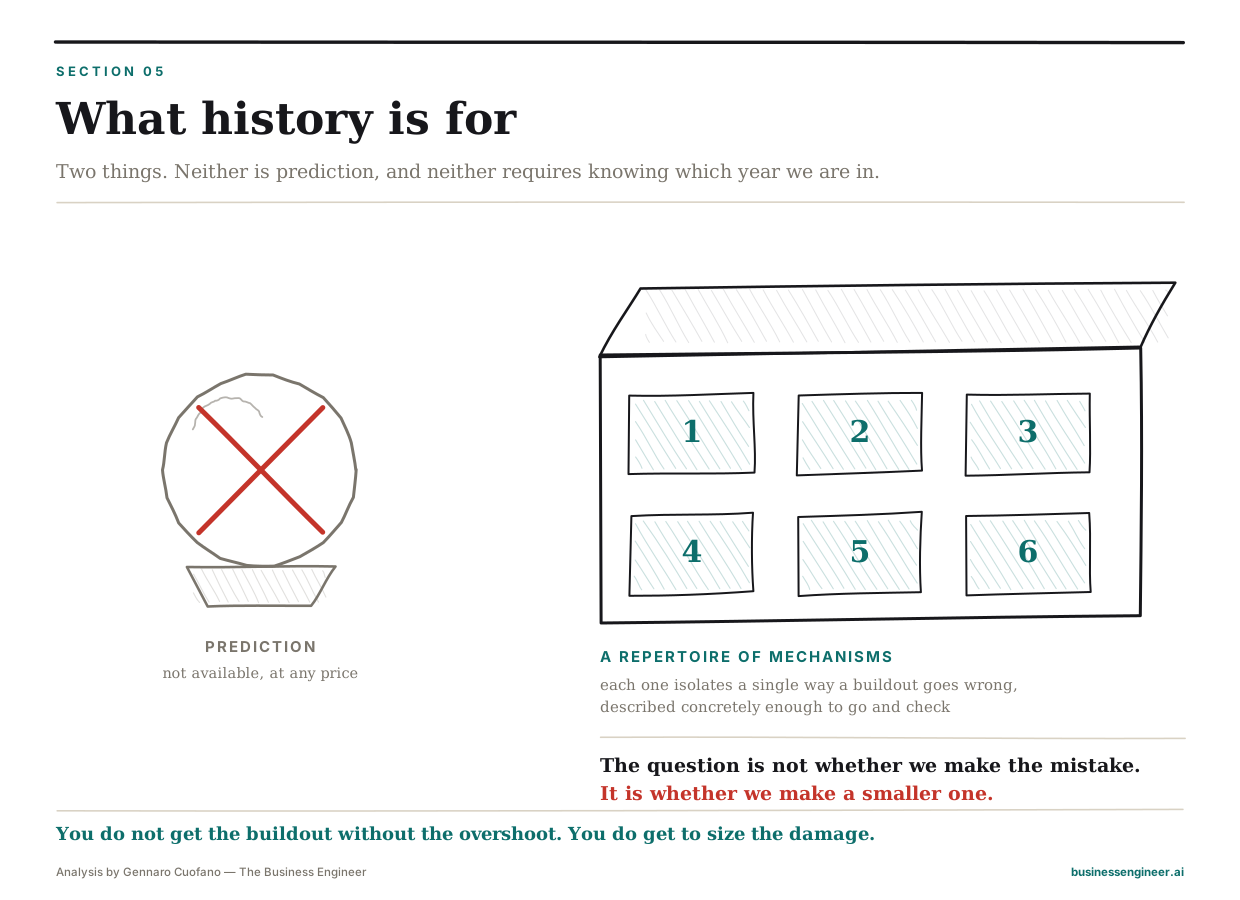
What history is for

Two things. Neither is prediction. Neither requires knowing which year we are in. A repertoire of mechanisms. Each episode isolates one specific way a buildout goes wrong, described concretely enough to check whether it is present now. The unit of transfer is the mechanism and the thing it tells you to look at. Not the ending. Smaller mistakes. Capital-heavy general-purpose technologies get overbu

Instrument one — the creditor's seat

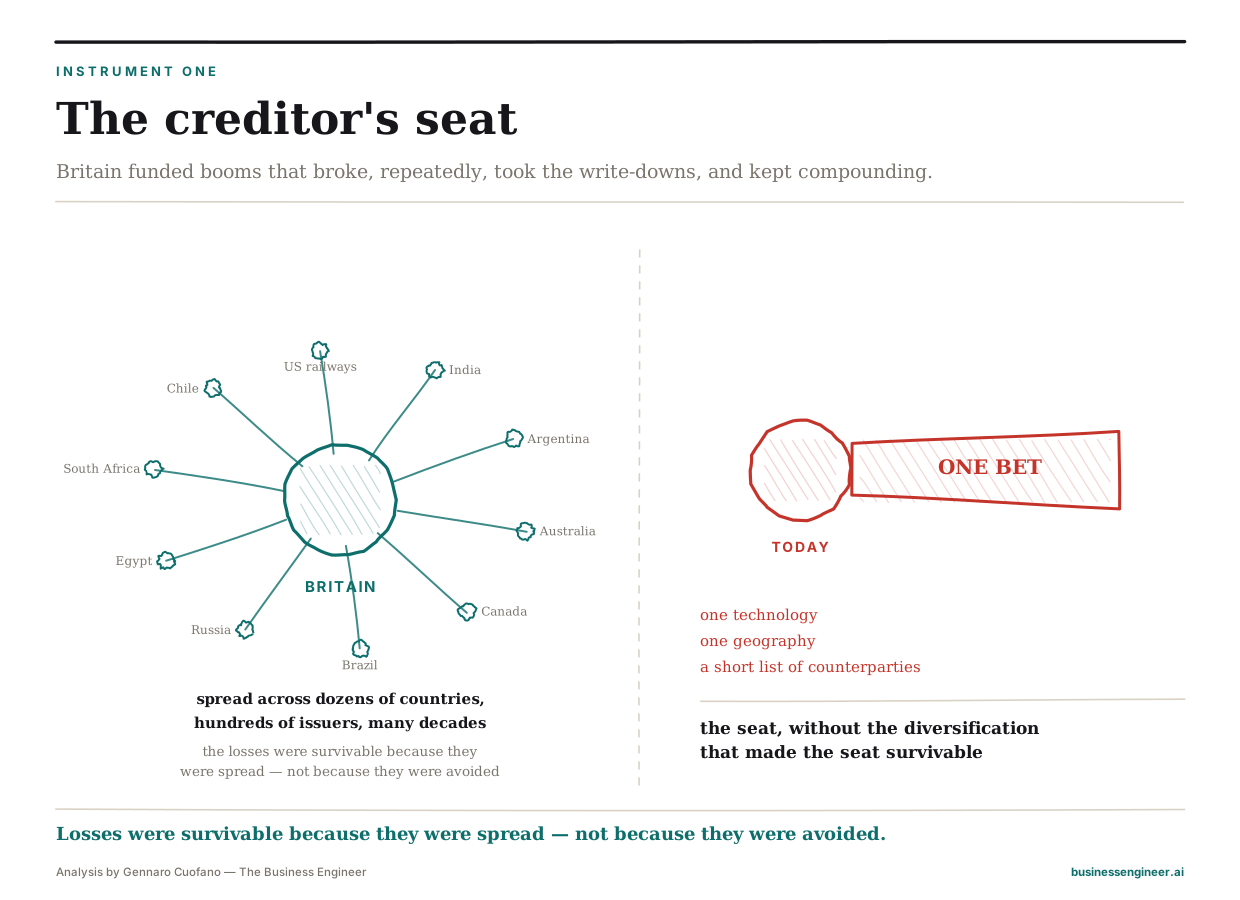
Britain, 1850s to 1870s. Capital export rose through the 1850s and 1860s and averaged about a third of national savings from 1870 to 1914. Overseas assets went from around 7% of national wealth in 1850 to roughly a third by 1913. American railways took close to 9% of it. What it teaches. The creditor survives the borrower's crisis. Britain funded booms that broke, repeatedly, took the write-downs,

Instrument two — the intermediary

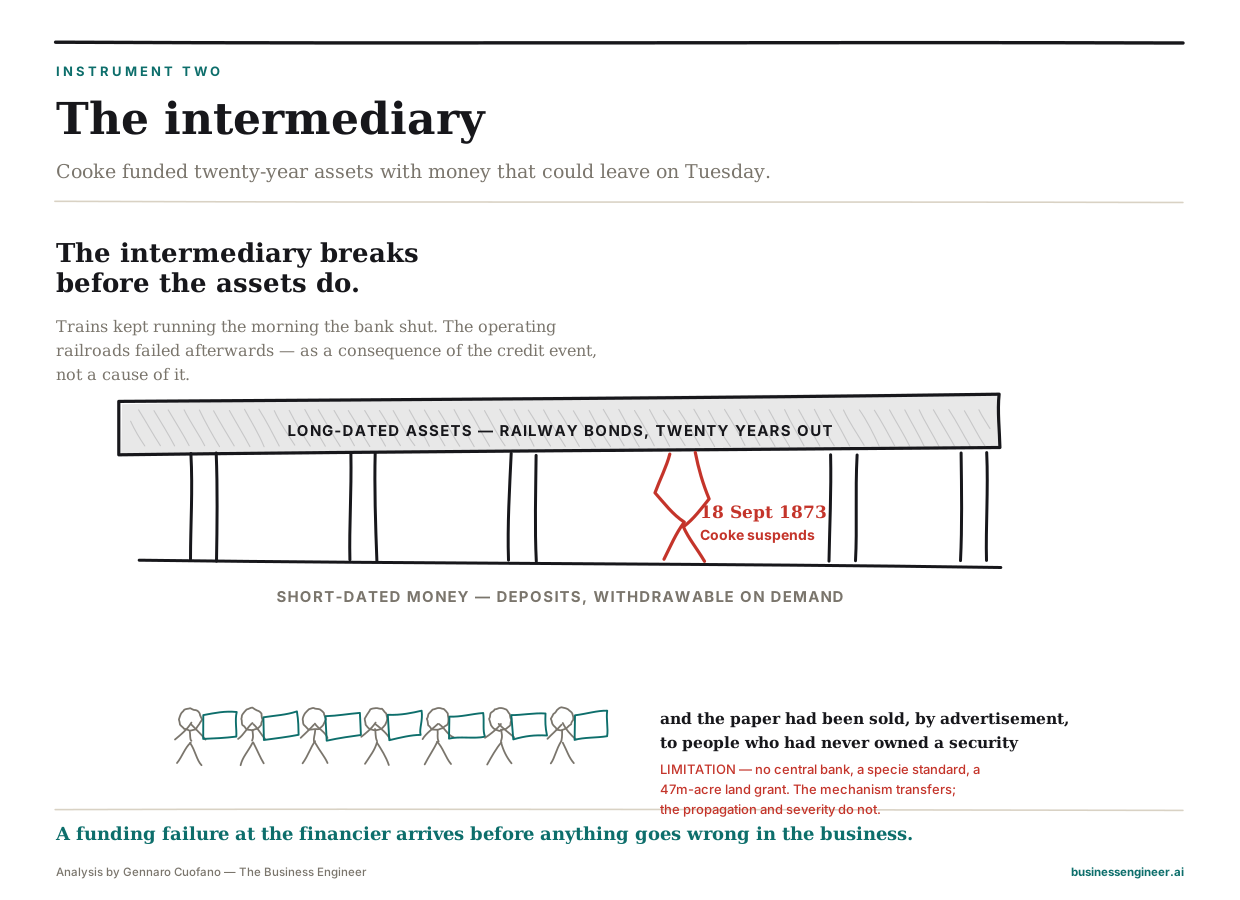
America, 1873. Cooke, the Northern Pacific, the September suspension. What it teaches. The intermediary breaks before the assets do. Cooke did not fail because trains stopped running. It failed because it funded long-dated assets with short-dated money and could not place paper it had already borrowed against. The railroads mostly failed afterwards — as a consequence of the credit event, not a cau

Instrument three — the unbuilt

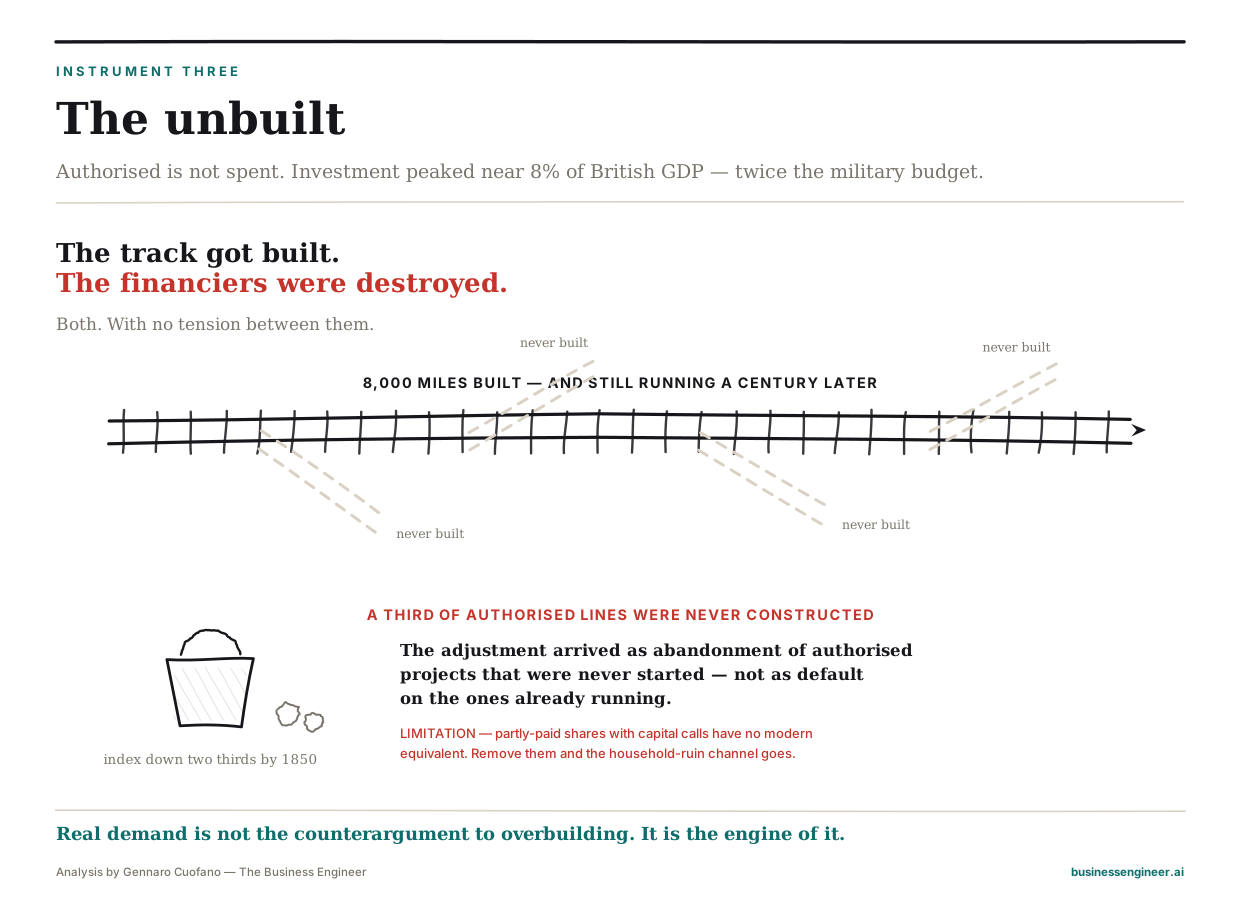
British railways, 1840s. In 1846 Parliament passed 272 Acts incorporating railway companies, covering about 9,500 miles of proposed route, with authorised capital around £132 million. Authorised is not spent, and the difference matters. Actual railway investment was £30 million in 1846 and peaked at £44 million in 1847 — almost 8% of British GDP, and twice that year's military budget. It did not f

Instrument four — the booking

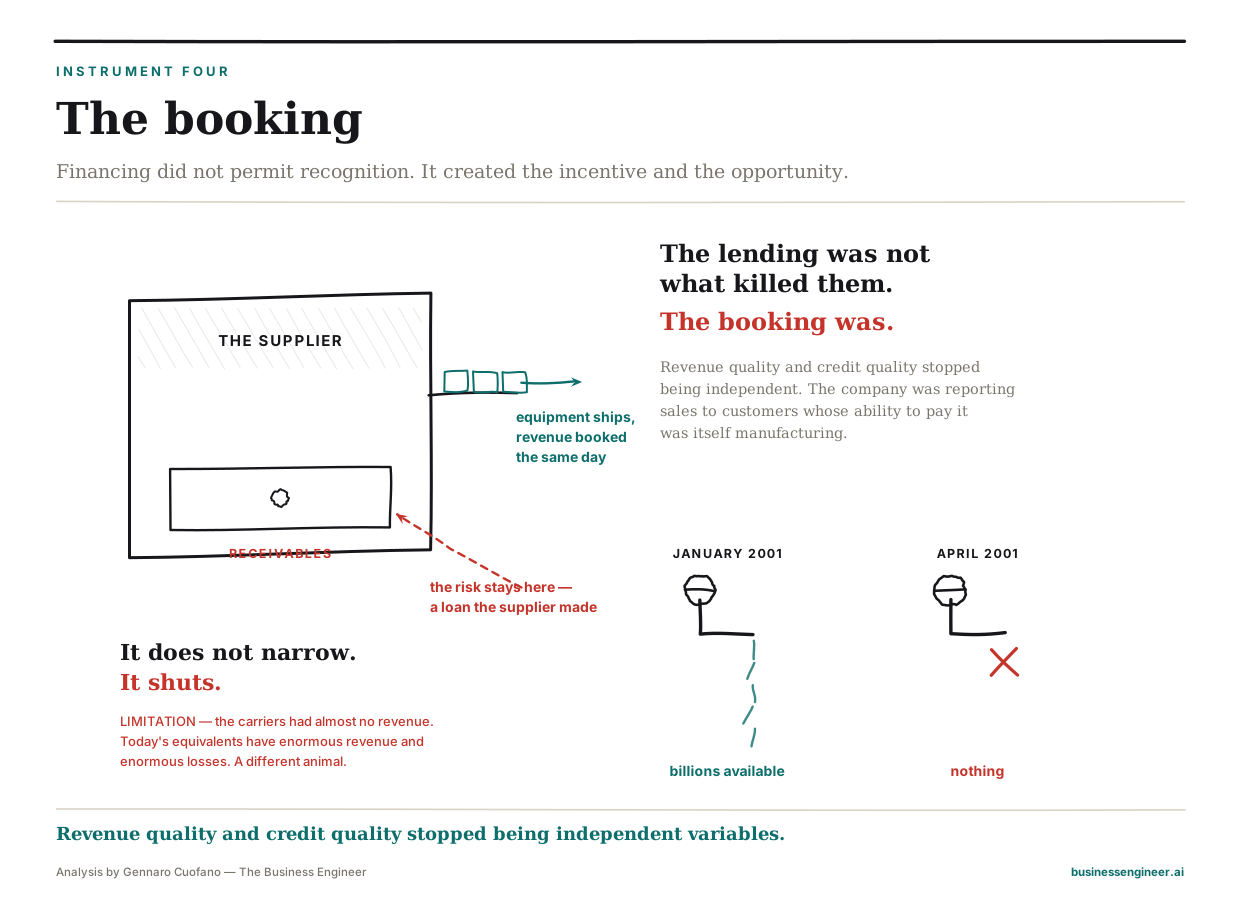
Telecom, 1996 to 2001. More than 2,000 competitive carriers raised around $82 billion by the end of 1999. Industry capital spending went from about $56 billion in 1997 to roughly $120 billion in 2000. Then the equipment makers began financing their own customers. Lucent disclosed maximum commitments of about $8.1 billion. Nortel committed around $3.1 billion with roughly $1.4 billion drawn. Cisco

Instrument five — the structure

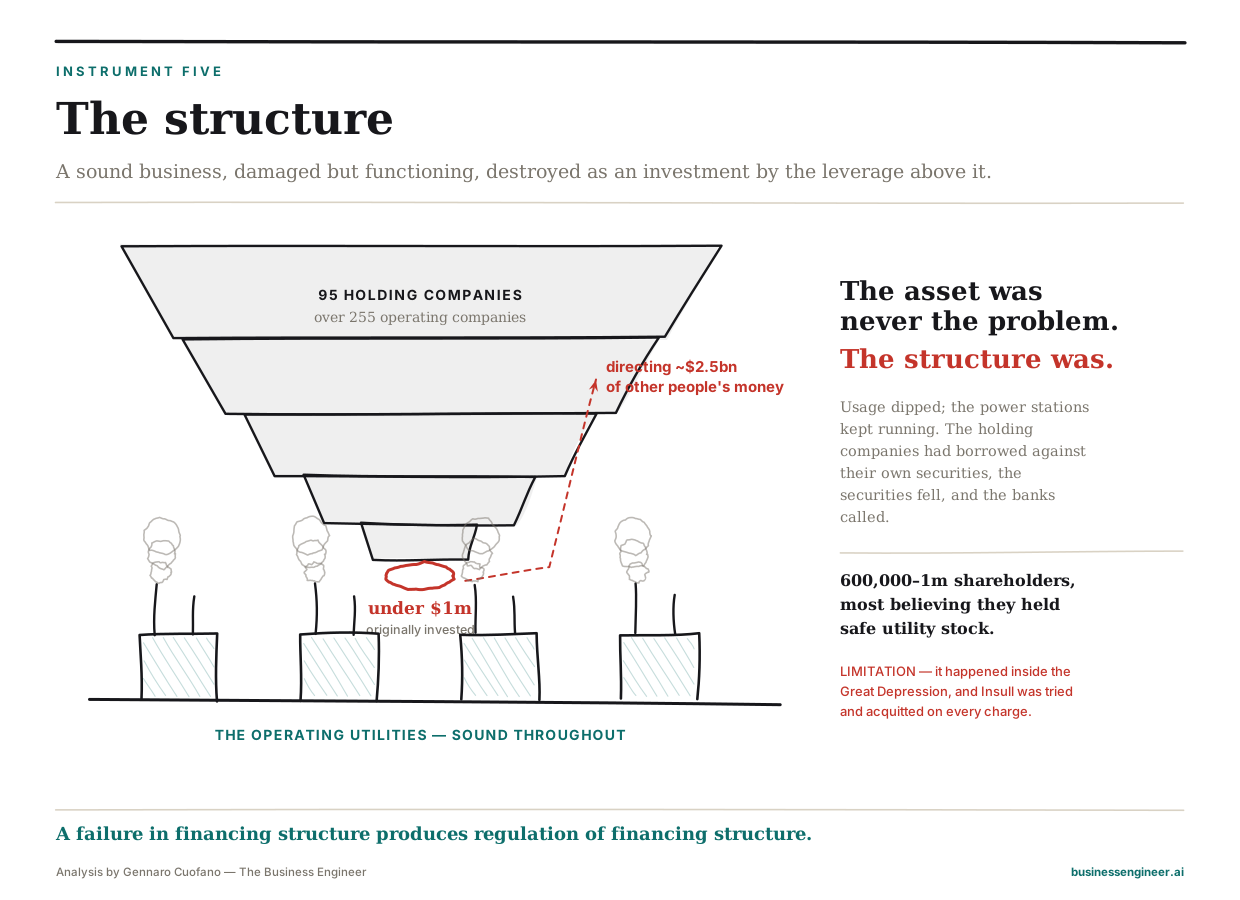
Electrification, 1892 to 1935. Samuel Insull built something unambiguously real. Chicago Edison became the largest electricity producer in the world, and he drove the economics that put power into ordinary homes. Above those operating utilities he stacked a pyramid — dozens of holding companies over hundreds of operating ones, capped by two large investment trusts, with an original investment of w

Instrument six — containment

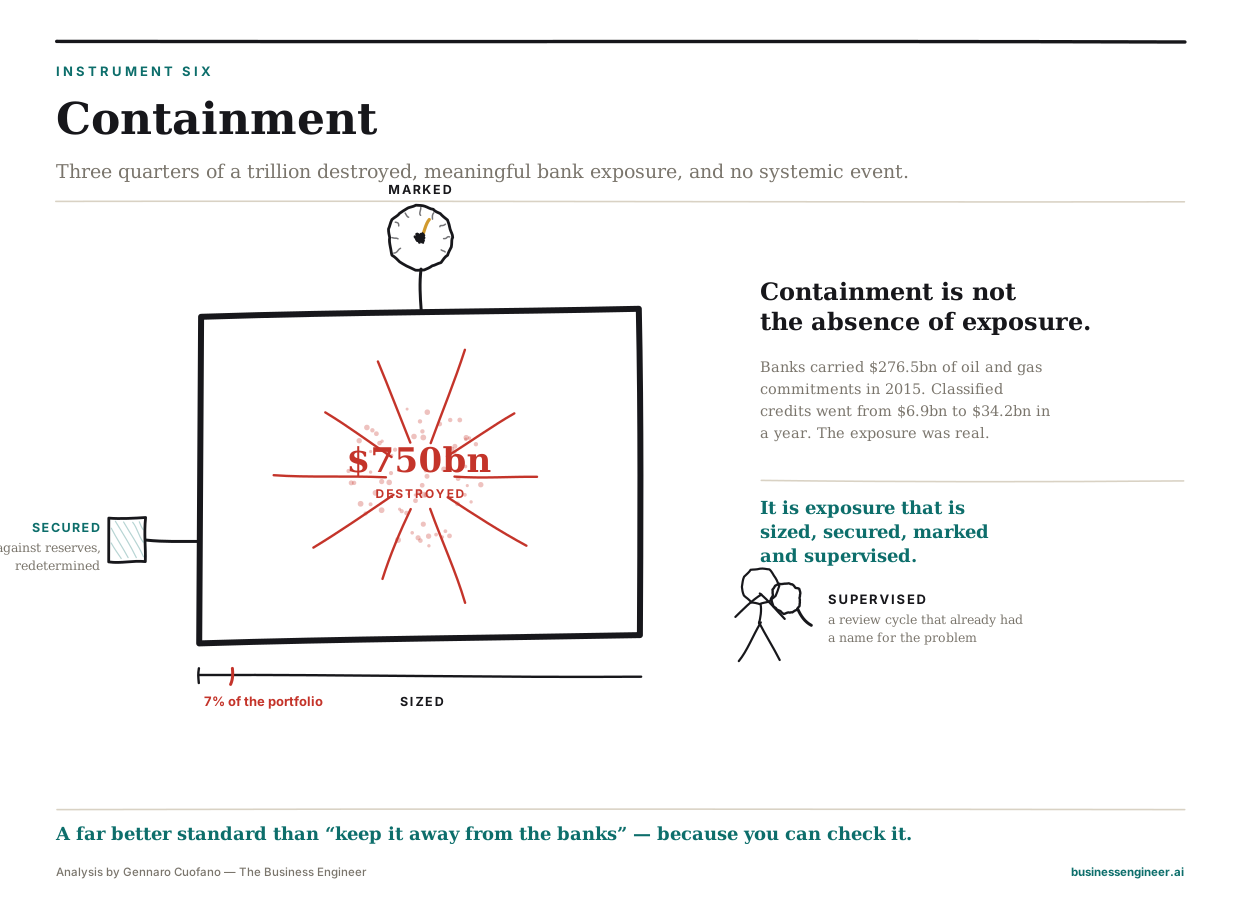
Shale, 2010 to 2020. US shale burned roughly $300 billion of negative free cash flow between 2010 and 2019, impaired more than $450 billion of invested capital, and produced over 190 bankruptcies. Production more than doubled, peaking near 13 million barrels a day. And it caused no systemic event. The tempting explanation is that the paper never reached the financial system's core. That is false,

Instrument seven — the machinery

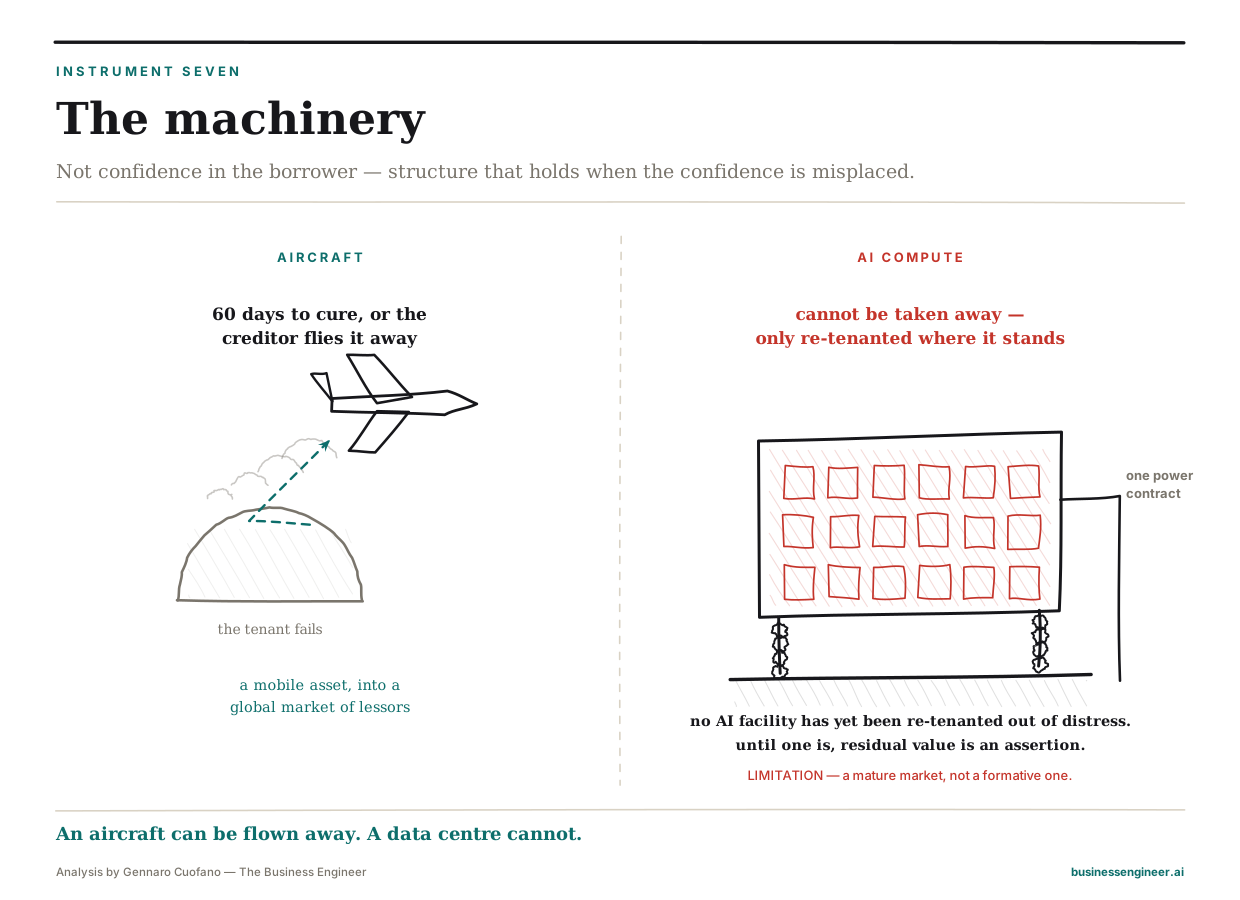
Aircraft finance, 1994 to now. Enhanced equipment trust certificates have financed aircraft since the early 1990s, with senior tranches often rated well above the airline's own credit. Airlines go bankrupt constantly. The structure works anyway. Get the law right, because the shorthand version is wrong. Section 1110 of the US Bankruptcy Code does not simply exempt aircraft from the automatic stay.

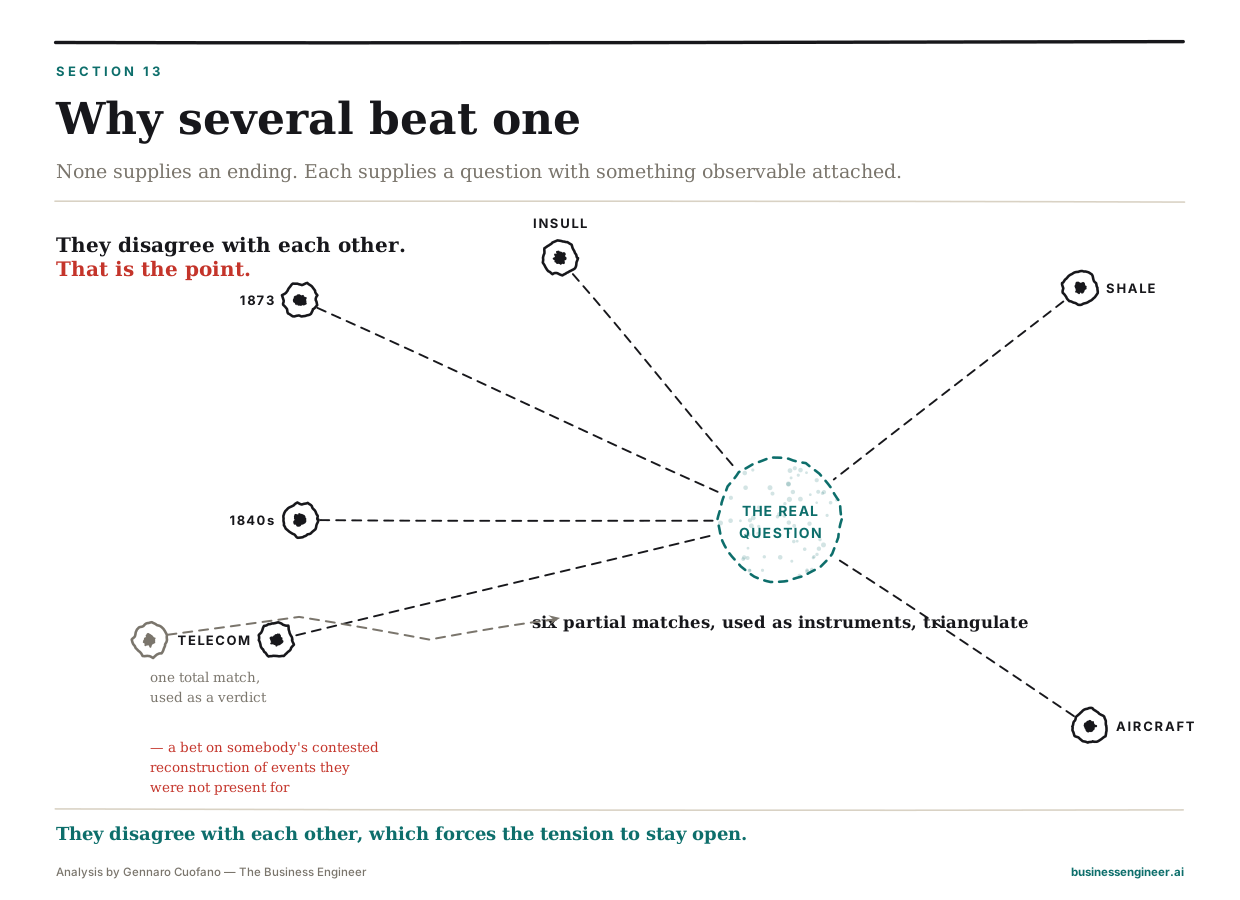
Why several beat one

None of these supplies an ending. What they supply is a set of questions with something observable attached: Is the creditor's exposure spread across borrowers, geographies and horizons? Is the intermediary funding long assets with short money? Is the adjustment appearing in the unbuilt rather than the built? Have revenue quality and credit quality stopped being independent? Is anyone borrowing ag

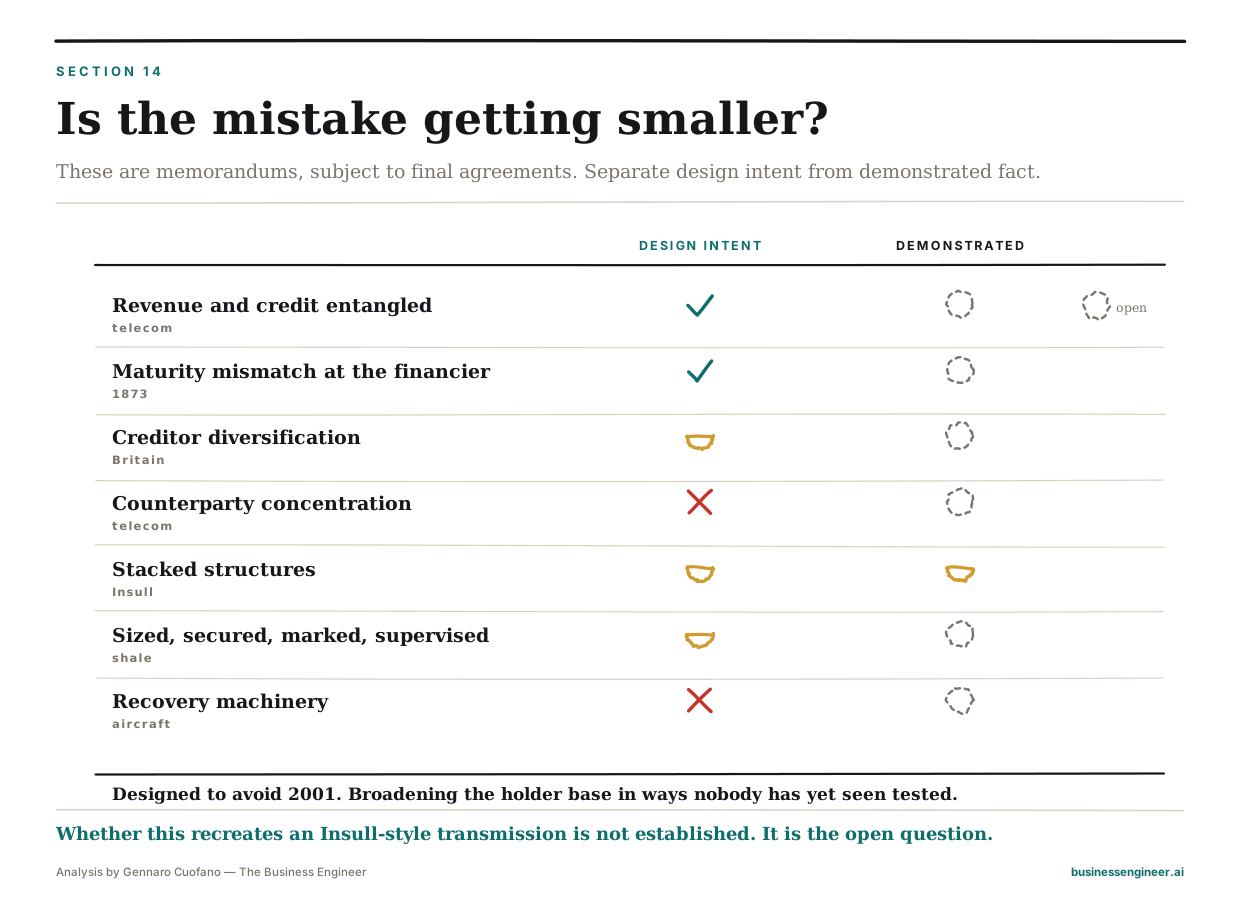
Is the mistake getting smaller?

One caution first, because this is where memos like this overreach. What the August 2026 announcements establish is directional. Nvidia signed memorandums of understanding with Apollo, BlackRock, Blackstone, Brookfield, Goldman Sachs and KKR around independent compute-financing platforms, with an ambition to mobilise more than $500 billion of third-party capital. The institutions are to underwrite

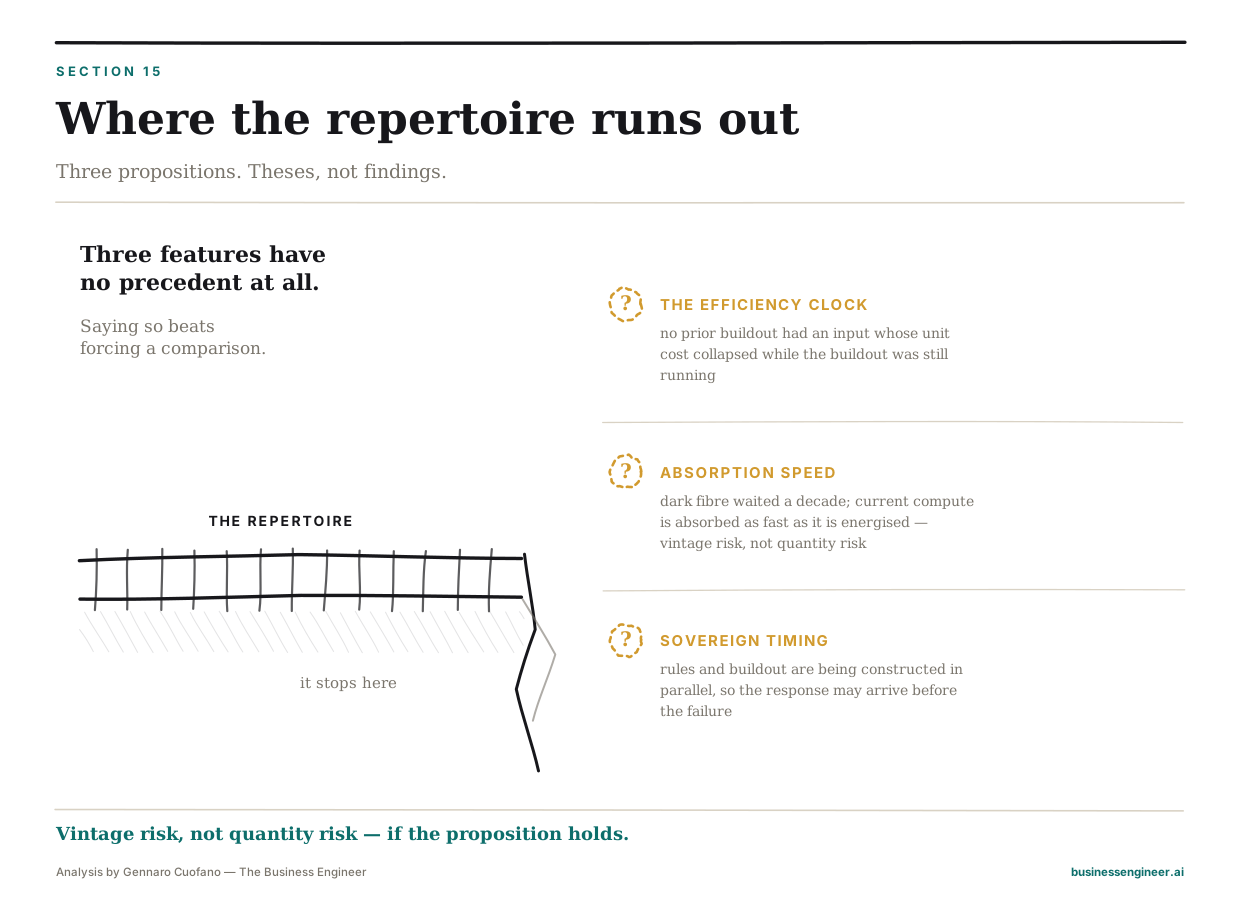
Where the repertoire runs out

Three propositions. Theses, not findings. The efficiency clock. The claim that no previous buildout had an input whose unit cost collapsed by orders of magnitude while the buildout ran is provocative and not yet tested against a systematic survey. If it holds, it cuts both ways — expanding the market while obsoleting the specific collateral in the specific vehicle. Absorption speed. Dark fibre wai

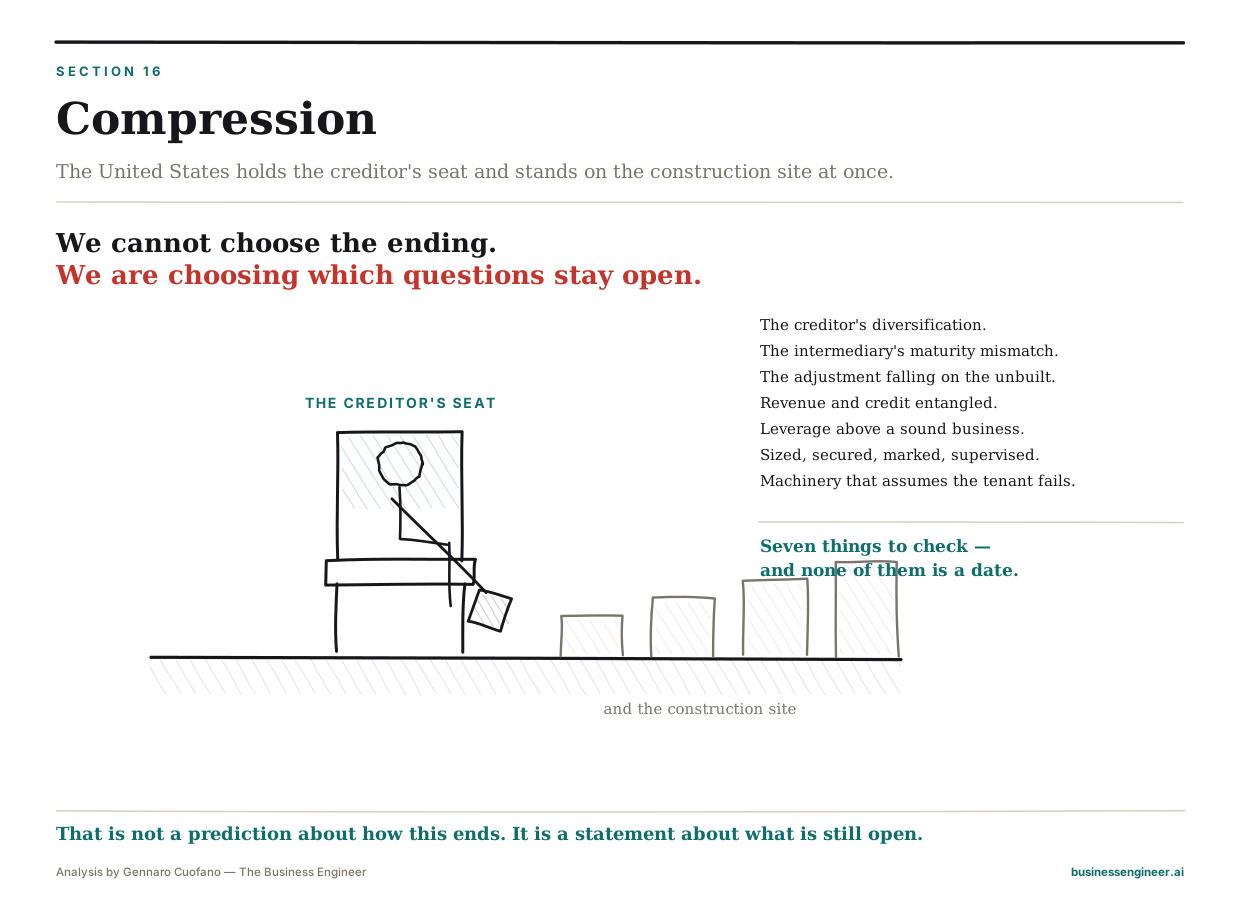
Compression

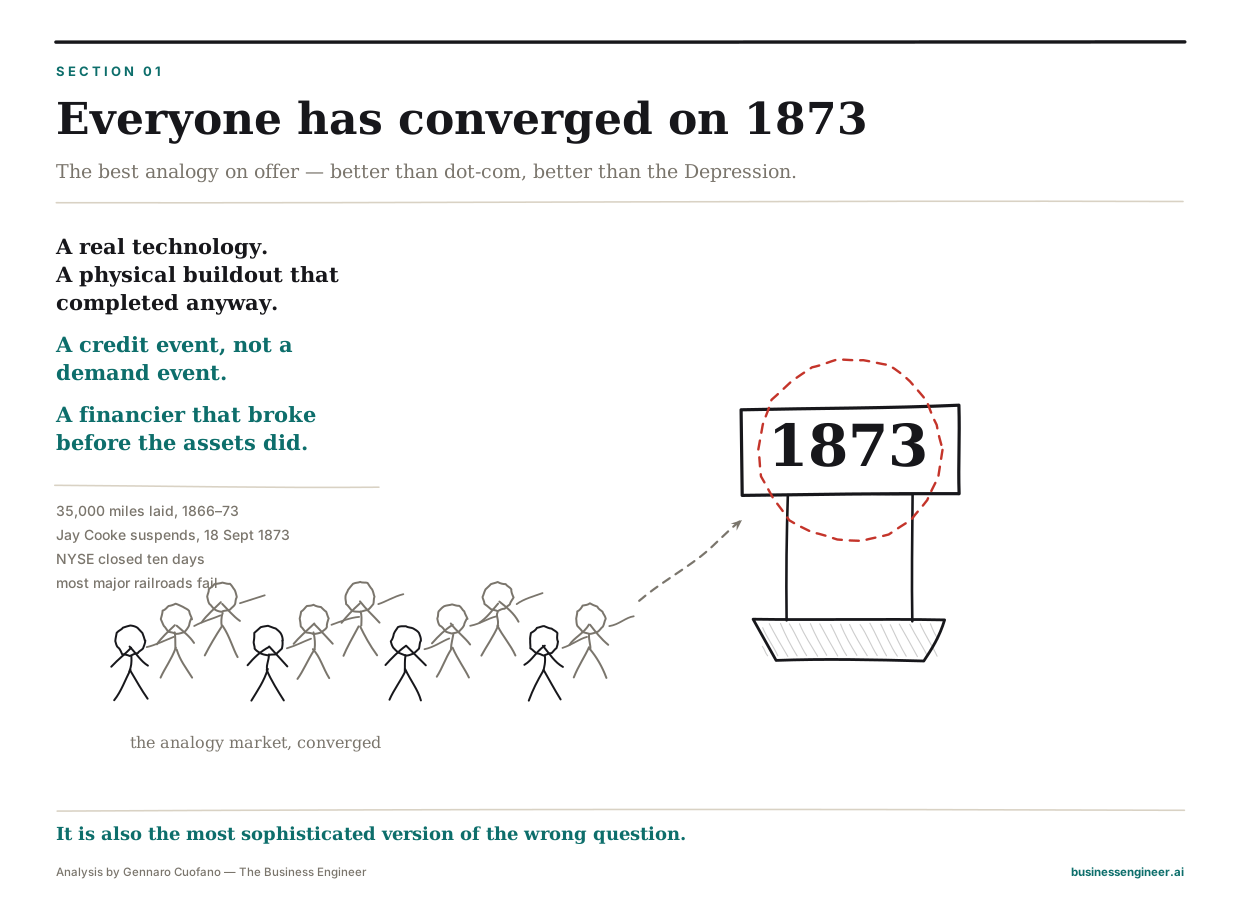
The consensus has largely settled on 1873, and for good reason. It is probably the closest historical analogue we have: a genuine technological breakthrough, a massive physical buildout, a credit shock rather than a collapse in end demand, and a financial intermediary that failed before the underlying infrastructure did. But the analogy is also incomplete. In 1873, the United States was the capita
Seven historical instruments

Each instrument transfers one mechanism, one observable check, and one explicit boundary—not a foretold ending.

01

Instrument one - the creditor's seat

Britain's capital exports from the 1850s through the 1870s show that a creditor can absorb borrower crises when losses are diversified across borrowers, countries, and decades.

What it teaches
The creditor can survive the borrower's crisis when exposures are broadly diversified rather than avoided.
What to check
Check whether compute-credit exposure is spread across borrowers, geographies, technologies, and horizons.
Where it stops
Victorian Britain financed infrastructure abroad, while the United States is financing infrastructure built largely at home.
02

Instrument two - the intermediary

Jay Cooke & Company's 1873 failure shows that a financing intermediary can break before the physical infrastructure or end demand fails.

What it teaches
Long-lived assets financed with short-lived money can trigger a funding crisis at the intermediary before operating assets deteriorate.
What to check
Check maturity profiles, commitments written against capital not yet raised, repricing risk, and the final holders of the paper.
Where it stops
The 1873 regime lacked a central bank, used inconvertible greenbacks, relied on enormous land grants, and placed America in the debtor's seat.
03

Instrument three - the unbuilt

The British railway buildout of the 1840s shows that the adjustment may appear in authorized projects never started rather than defaults on operating infrastructure.

What it teaches
Infrastructure completion and investor repayment are independent outcomes; real demand can be the engine of overbuilding.
What to check
Watch contracted capacity that quietly fails to commence, distinguishing signed plans from concrete construction.
Where it stops
Partly-paid shares with capital calls created a household-ruin channel that has no close modern equivalent.
04

Instrument four - the booking

Telecom vendor financing from 1996 to 2001 shows how revenue quality and credit quality can become entangled when suppliers underwrite their own customers.

What it teaches
Financing, side agreements, and doubtful collectibility can create incentives and opportunities for aggressive revenue recognition.
What to check
Check whether customer exposure sits on suppliers' own accounts or is independently underwritten, and whether plans assume a gradual closing of the funding window.
Where it stops
Telecom carriers often had little revenue, while frontier AI counterparties can have large and rapidly growing revenue alongside large losses.
05

Instrument five - the structure

Samuel Insull's electrification pyramid shows how leverage and cross-obligations above a functioning business can destroy an otherwise real infrastructure investment.

What it teaches
Asset quality and financing quality are separate questions; a sound operating asset does not protect investors from a fragile capital structure.
What to check
Check for entities borrowing against holdings marked to the financed asset and cross-obligations that cause nominally separate vehicles to fail together.
Where it stops
The Great Depression also damaged operating revenues, and modern disclosure removes much of the opacity that enabled the pyramid.
06

Instrument six - containment

US shale from 2010 to 2020 shows that large losses can remain non-systemic even with meaningful bank exposure when credit is sized, secured, marked, and supervised.

What it teaches
Containment is not the absence of financial-system exposure; it is exposure with limits, collateral, valuation discipline, and supervisory review.
What to check
Check portfolio share, security, marking frequency, supervisory vocabulary, and review cycles.
Where it stops
Shale sells an undifferentiated commodity into a global price; its containment lesson transfers more readily than its demand analysis.
07

Instrument seven - the machinery

Aircraft finance since 1994 shows what mature recovery machinery looks like when structures assume tenant failure and are designed to work anyway.

What it teaches
A mature asset class relies on tested recovery machinery, not confidence that borrowers will never fail.
What to check
Check for statutory protections, liquidity facilities, overcollateralization, repossession paths, re-tenanting capability, and secondary markets.
Where it stops
Aircraft can enter a global leasing market after repossession; data centers are immovable bundles tied to a building, power contract, jurisdiction, and local demand.

The roles are the wrong way round

The article's key correction is positional: modern America resembles the 1873 creditor more than the 1873 borrower, while also hosting the buildout itself. The China column is intentionally narrow and should not be stretched beyond the debtor-side role.

DimensionUnited States · 1873Britain · 1873United States · 2026China · 2026
Capital positionCapital-importing industrializerGlobal creditor and capital exporterReserve-currency creditor and domestic construction siteCapital-importing, state-directed industrializer
Reserve-currency positionNoYesYesNo
Buildout locationPrimarily domestic railroadsLargely overseas infrastructurePrimarily domestic AI infrastructurePrimarily domestic industrial infrastructure
Shock originVienna and European capital withdrawalLosses transmitted from overseas borrowersUnknown; current cycle has not resolvedNot asserted; analogy used only for debtor-side role
Creditor diversificationConcentrated dependence on foreign inflowsBroad across issuers, countries, and decadesOpen question; compute exposure may be concentratedNot evaluated in the article
Financial safety machineryNo central bank and limited machineryDeep markets but historically limited modern supervisionCentral bank, modern disclosure, but untested compute recoveryModern state-directed financial system; not stretched by the article

Is the mistake getting smaller?

The article separates design intent from demonstrated fact when assessing proposed AI compute-financing structures.

Creditor diversification

Open: the holder base may broaden while remaining concentrated in one technology, geography, and short counterparty list.

Revenue-credit entanglement

Design appears deliberately better through independent underwriting and capped residual-value support, but execution is not yet demonstrated.

Counterparty concentration

Appears repeated: the frontier tenant list is short, while stronger revenue-concentration claims depend on a disclosed denominator.

Maturity mismatch

Long-duration institutional infrastructure capital is the right design for long-lived assets, provided final vehicles are funded as described.

Recovery machinery

Not built: no equivalent statutory regime, tested re-tenanting path, or liquid market for facility-plus-power bundles.

Sized, secured, marked, supervised

Largely untested for compute credit at scale, with no established supervisory vocabulary or review cycle.

Source diagrams

All 17 substantive diagrams preserved from the subscriber email. Tracking pixels, reaction icons, and publication chrome are excluded.

Selected supporting sources

Four high-signal public sources support mechanisms explicitly named in the article. Source links and KG entity links remain distinct.

Source-attributed quantitative claims

Quantitative statements preserved as claims attributed to the source article; inclusion does not imply independent verification unless a citation is linked.

The article gives 89 of 364 railroads as bankrupt, alongside more than 100 bank failures and 18,000 business failures over two years

The article gives 89 of 364 railroads as bankrupt, alongside more than 100 bank failures and 18,000 business failures over two years.

The SEC found approximately $1

The SEC found approximately $1.1 billion of improperly recognized Lucent revenue.

US shale generated roughly $300 billion of negative free cash flow between 2010 and 2019 and impaired more than $450 billion of invested capital

US shale generated roughly $300 billion of negative free cash flow between 2010 and 2019 and impaired more than $450 billion of invested capital.

British railway investment reached £30 million in 1846 and peaked at £44 million in 1847, almost 8% of GDP

British railway investment reached £30 million in 1846 and peaked at £44 million in 1847, almost 8% of GDP.

Telecom industry capital spending rose from about $56 billion in 1997 to roughly $120 billion in 2000

Telecom industry capital spending rose from about $56 billion in 1997 to roughly $120 billion in 2000.

Across nine telecom suppliers, combined customer-financing exposure reached about $25

Across nine telecom suppliers, combined customer-financing exposure reached about $25.6 billion by the end of 2000.

In 1846 Parliament passed 272 Acts covering about 9,500 miles of proposed railway route with authorized capital around £132 million

In 1846 Parliament passed 272 Acts covering about 9,500 miles of proposed railway route with authorized capital around £132 million.

The article says Nvidia may provide residual-value support of up to 25% in some proposed structures

The article says Nvidia may provide residual-value support of up to 25% in some proposed structures.

The 2015 Shared National Credit review reported $276

The 2015 Shared National Credit review reported $276.5 billion of oil-and-gas commitments, about 7% of a $3.9 trillion portfolio.

The article reports more than 190 shale bankruptcies while production more than doubled and peaked near 13 million barrels per day

The article reports more than 190 shale bankruptcies while production more than doubled and peaked near 13 million barrels per day.

The article says August 2026 memorandums of understanding paired Nvidia with six financial institutions around independent compute-financing platforms targeting more than $500 billion of third-party capital

The article says August 2026 memorandums of understanding paired Nvidia with six financial institutions around independent compute-financing platforms targeting more than $500 billion of third-party capital.

Between 1866 and 1873 American railroads laid 35,000 miles of new track

Between 1866 and 1873 American railroads laid 35,000 miles of new track.

People

Organizations

Frequently Asked Questions

History cannot predict how the AI infrastructure cycle ends, but historical episodes can isolate mechanisms that investors and regulators can inspect now.

The analogy is sophisticated but places the modern United States in the role of 1873 America even though today's United States more closely occupies Britain's creditor and reserve-currency position.

The article describes America as a capital-importing industrializer whose infrastructure depended substantially on European savings.

Britain held the reserve currency, the deepest capital market, and the creditor position that financed infrastructure across many countries.

Its cause is disputed, it preceded the Federal Reserve, it operated under a contested monetary regime, and Northern Pacific economics depended on a land grant without a modern equivalent.

Historical causal chains are reconstructed after outcomes are known and remain disputed, so treating one episode as a solved template creates false precision.

The transferable unit is a mechanism paired with an observable diagnostic question and an explicit boundary where the analogy stops working.

It tests whether losses are diversified across borrowers, countries, technologies, and time horizons rather than concentrated in a narrow compute-credit position.

It tests maturity mismatch, commitments against capital not yet raised, repricing risk, and whether financiers can fail before the underlying infrastructure.

The article argues that real demand attracts the capital that makes the buildout possible and can therefore power the overshoot rather than prevent it.

It revealed the danger of suppliers reporting sales to customers whose ability to pay the suppliers were themselves underwriting.

Shale shows that containment can coexist with bank exposure when that exposure is modest, secured, periodically marked, and supervised.

It is a live, mature market with legal and financial machinery explicitly designed to keep working through airline bankruptcies.

Creditor diversification, counterparty concentration, scaled supervision, tested recovery paths, a secondary market for facility-plus-power bundles, and actual performance of proposed financing vehicles remain open.

Some proposals appear designed to reduce direct vendor-financing risk while distributing exposure more broadly, but whether they create new transmission channels is not established.

Glossary of Terms

Capital position

Whether the economy is primarily importing savings or supplying capital to others.

Reserve-currency position

Whether the economy issues the dominant reserve currency and anchors the deepest capital market.

Buildout location

Where the infrastructure financed by the relevant savings is physically constructed.

Shock origin

Where the initiating financial disruption or withdrawal begins.

Creditor diversification

How broadly creditor risk is distributed across borrowers, countries, technologies, and time.

Financial safety machinery

Availability of central-bank liquidity, supervision, disclosure, and tested recovery structures.

Historical analogy

A comparison that maps features of a past episode onto a present situation; the article treats it as a diagnostic aid rather than a prediction engine.

Repertoire of mechanisms

A set of partial historical instruments, each isolating a failure mechanism, an observable check, and a boundary.

Creditor's seat

The position of the capital provider whose savings finance infrastructure and whose resilience depends on diversification and structure.

Maturity mismatch

Funding long-lived assets with shorter-duration liabilities that reprice or must be withdrawn before asset cash flows arrive.

Unbuilt adjustment

A contraction that appears as authorized or contracted projects never commencing rather than failures of already operating assets.

Vendor financing

A supplier's financing of customers purchasing its products, potentially linking customer credit quality to reported revenue quality.

Revenue-credit entanglement

A condition in which sales quality depends on credit risk that the seller itself is underwriting.

Stacked financing structure

A hierarchy of holding companies or vehicles whose leverage and cross-obligations sit above operating assets.

Contained exposure

Credit exposure that is sized, secured, marked, and supervised rather than absent from the financial system.

Reserve-based lending

Energy lending secured against reserves and periodically redetermined as reserve values and commodity conditions change.

Recovery machinery

Legal, financial, and operational arrangements designed to preserve creditor recovery when a borrower or tenant fails.

Enhanced equipment trust certificate

An aircraft-finance structure with tranched claims, collateral, liquidity support, and bankruptcy-specific recovery protections.

Residual-value support

A capped commitment intended to absorb part of a financed asset's decline in residual value.

Re-tenanting

Replacing a failed facility tenant with a new operator able to use the same location, power contract, and installed equipment.

Smaller mistake

The article's objective of reducing the damage from inevitable overbuilding through better financing, supervision, and recovery design.

How-To Guide

1

Instrument one - the creditor's seat

Check whether compute-credit exposure is spread across borrowers, geographies, technologies, and horizons. Record the evidence, then preserve this boundary: Victorian Britain financed infrastructure abroad, while the United States is financing infrastructure built largely at home.

2

Instrument two - the intermediary

Check maturity profiles, commitments written against capital not yet raised, repricing risk, and the final holders of the paper. Record the evidence, then preserve this boundary: The 1873 regime lacked a central bank, used inconvertible greenbacks, relied on enormous land grants, and placed America in the debtor's seat.

3

Instrument three - the unbuilt

Watch contracted capacity that quietly fails to commence, distinguishing signed plans from concrete construction. Record the evidence, then preserve this boundary: Partly-paid shares with capital calls created a household-ruin channel that has no close modern equivalent.

4

Instrument four - the booking

Check whether customer exposure sits on suppliers' own accounts or is independently underwritten, and whether plans assume a gradual closing of the funding window. Record the evidence, then preserve this boundary: Telecom carriers often had little revenue, while frontier AI counterparties can have large and rapidly growing revenue alongside large losses.

5

Instrument five - the structure

Check for entities borrowing against holdings marked to the financed asset and cross-obligations that cause nominally separate vehicles to fail together. Record the evidence, then preserve this boundary: The Great Depression also damaged operating revenues, and modern disclosure removes much of the opacity that enabled the pyramid.

6

Instrument six - containment

Check portfolio share, security, marking frequency, supervisory vocabulary, and review cycles. Record the evidence, then preserve this boundary: Shale sells an undifferentiated commodity into a global price; its containment lesson transfers more readily than its demand analysis.

7

Instrument seven - the machinery

Check for statutory protections, liquidity facilities, overcollateralization, repossession paths, re-tenanting capability, and secondary markets. Record the evidence, then preserve this boundary: Aircraft can enter a global leasing market after repossession; data centers are immovable bundles tied to a building, power contract, jurisdiction, and local demand.

About This Page

This portable knowledge-graph overview was generated directly from the companion RDF extracted from the subscriber email and grounded in the source post. Named entities resolve through URIBurner; no claim is made that the companion graph has been uploaded to a public SPARQL endpoint.

Technology stack: kg-generator, rdf-infographic-skill, and GPT-5 Chat.

Knowledge Graph Explorer

Interactive graph visualization derived from the companion RDF. Click nodes to resolve, drag to explore. Graph data embedded from companion RDF at generation time.

The 1873 Delusion

Nodes: 0 Links: 0
Click SVG to activate zoom, click outside to release | Drag nodes to pin, double-click to unpin
Classes Properties Instances

SPARQL Workbench

Use these SPARQL recipes after loading the companion RDF into the named graph shown below. This local collection does not claim that the graph is already deployed; edit the graph IRI for your target store, then copy the query.

Query editor

Live execution intentionally disabled until the target graph is verified SELECT: text/x-html+tr | DESCRIBE/CONSTRUCT: text/x-html-nice-turtle